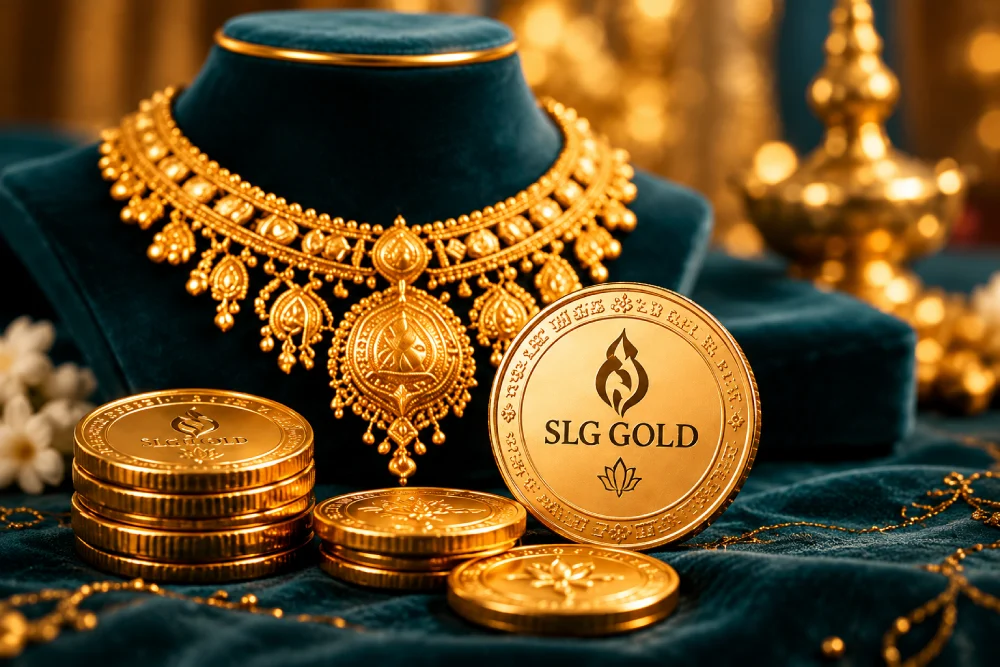
Gold holds a special place in Indian culture, from weddings and festivals to family celebrations and personal milestones. When planning a gold purchase, many people consider two popular options: gold coins and gold jewellery.
Both products contain gold, but they serve different purposes. Gold coins are often chosen for gifting and traditional gold purchases, while jewellery combines gold with design and craftsmanship. Understanding their differences can help you choose the option that best suits your needs, budget and occasion.
1. What Are Gold Coins?
Gold coins are gold products manufactured in specific weights and purity levels. They are available in different sizes, depending on the seller and product range.
People Commonly Purchase Gold Coins For:
Before buying a gold coin, review our comprehensive checklist on 10 things to check before buying gold coins to verify purity, weight, invoice details, and tamper-evident packaging.
2. What Is Gold Jewellery?
Gold jewellery includes ornaments such as necklaces, chains, rings, earrings, bangles and bracelets. In addition to the gold itself, jewellery prices may reflect design, craftsmanship and making charges. Some products may also include gemstones or other materials.
People Often Choose Gold Jewellery For:
When purchasing jewellery, consider its purity, design, comfort, durability and total cost.
3. Gold Coins vs Gold Jewellery: Key Differences
The table below highlights the practical differences between gold coins and gold jewellery across key decision factors:
| Feature | Gold Coins Minted | Gold Jewellery Artisanal |
|---|---|---|
| Main purpose | Gifting and gold purchases | Wearing, gifting and celebrations |
| Design | Usually simple coin designs | Available in many intricate styles |
| Purity | Depends on product (often 24K or 22K) | Depends on product (commonly 22K 916) |
| Making charges | May apply depending on product and seller | Often an important part of the price |
| Additional costs | Taxes and applicable charges | Making charges, taxes, and possible stone costs |
| Everyday use | Generally not designed as wearable jewellery | Designed to be worn with comfort |
| Resale or exchange | Depends on seller's policy and product verification | Depends on purity, condition, and seller policy |
The exact price and conditions vary by product and seller. Always compare the complete invoice rather than relying only on the advertised price.
4. Which Option Is Better for Gifting?
The best choice depends on the recipient and the occasion. Both options carry immense emotional warmth and cultural dignity:
Choose Gold Coins When:
Choose Gold Jewellery When:
In either case, confirm the product details, final price and applicable purchase conditions. To understand how karat grades impact daily wear and bullion value, read our guide on gold purity explained: 22K vs 24K gold.
5. Compare the Total Purchase Cost
The price of a gold product is not determined by purity alone. When you receive a purchase quote, the final bill typically accounts for several distinct components:
Components of a Transparent Gold Bill:
For a fair comparison, look at products with comparable purity and gold weight. Review all charges before deciding which product fits your budget.
6. What About Resale and Exchange?
Resale and exchange conditions can differ significantly between gold coins and jewellery. The valuation you receive depends on purity verification, weight, product condition, the prevailing gold rate and the specific jeweller's policy. Jewellery may also have deductions or exclusions related to making charges, stones or other embellishments.
1. Buyback or Exchange Policy: Does the seller offer a guaranteed buyback or exchange facility?
2. Valuation Method: How is the melt or exchange value calculated against live market rates?
3. Deductions: Are any deductions applied for making charges, stone weight, or melting losses?
4. Invoice Requirement: Is the original tax invoice required for full valuation eligibility?
5. Restrictions: Are there product-specific or timing restrictions on exchanges?
Do not assume that you will receive the full original purchase price when reselling either product. Always ask for clear, written buyback terms upfront.
7. How Does Gold Purity Affect Your Choice?
Gold purity indicates how much pure gold a product contains. For example, 22K gold contains approximately 91.67% gold (BIS 916), while 24K gold marked 999 contains approximately 99.9% gold.
Many traditional jewellery products are made using 22K gold because the alloyed metals provide the strength needed to hold intricate craftsmanship. Certain gold coins are available in higher purity levels (such as 24K 999). However, specifications vary, so always check the marking and documentation for the exact product.
Choose based on the intended use and verified product details rather than assuming all coins or all jewellery have the same purity.
8. Tips Before Buying Gold Coins or Jewellery
Follow these practical checks before completing your purchase:
Set your budget
Decide how much you can comfortably spend without stretching your essential monthly funds.
Check the product details
Confirm the weight, purity, hallmark stamping and complete product description.
Ask for a clear invoice
Review the item price, applicable charges, breakdown of making costs and GST breakdown.
Verify authenticity
Buy from a reputable jeweller with genuine BIS Hallmarking and proper assay certificates.
Read the policies
Understand the return, exchange and buyback conditions, timelines, and deductions upfront.
Keep your records safe
Store the invoice and supporting certification documents in a secure place for future reference.
Frequently Asked Questions
FAQ Are gold coins better than gold jewellery?
Neither option is automatically better. Gold coins may suit buyers looking for a simple gold product, while jewellery may be more appropriate for wearing and special occasions. Your purpose and budget should guide the decision.
FAQ Do gold coins always have lower making charges?
Not necessarily. Charges vary by product and seller. Check the complete price breakdown before comparing products.
FAQ Is 24K gold always used for gold coins?
No. Gold coin purity varies by product. Check the stated purity, marking and authenticity documentation before buying.
FAQ Can gold jewellery be exchanged for gold coins?
This depends on the seller's exchange policy, product eligibility and valuation rules. Confirm the conditions directly with the seller.
FAQ Which option is suitable for a wedding gift?
Both can be suitable. Jewellery may be preferred for its traditional and wearable value, while gold coins can be a simple alternative. Consider the recipient's preferences and your budget.
Conclusion
Gold coins and gold jewellery each have their own advantages. Coins can be a practical choice for certain gifting and gold purchasing needs, while jewellery offers design, craftsmanship and wearable value.
Before deciding, compare purity, weight, total cost, authenticity and resale or exchange conditions. Choosing according to your purpose and budget can make your gold purchase more straightforward.
At SLG GOLD, we encourage customers to understand product details and applicable terms before making a purchase.
Save in 100% BIS Hallmarked Gold with SLG GOLD
Whether you prefer gold coins or exquisite jewellery, explore SLG GOLD's structured savings programmes to plan your future purchases with ease and complete transparency.
Explore SLG GOLD Savings ProgrammeDisclaimer: This article is for general educational purposes only and does not constitute financial or investment advice. Gold prices fluctuate, and resale values are not guaranteed. Product specifications, charges and policies vary by seller; verify the applicable details before purchasing.